

Key Takeaways
- The emerald ash borer (EAB) is an invasive beetle species causing widespread damage to ash trees in Lafayette, CO.
- Early detection of EAB symptoms allows homeowners to implement treatment options before irreversible damage occurs.
- Trees severely infested by EAB may require removal to protect nearby healthy trees and prevent further spread.
- Professional arborists can assess tree health, recommend appropriate treatments, and safely handle tree removal if needed.
Lafayette, CO, is known for its beautiful tree-lined streets and lush landscapes. However, one pest has become a serious threat to ash trees in the area: the emerald ash borer (EAB). This invasive beetle species, native to Asia, has spread across the United States and is causing rapid and irreversible damage to ash trees. If you suspect your ash tree is infested, it’s essential to act quickly. Early detection and treatment can save your tree, but in some cases, removal may be the only viable solution.
Why the Emerald Ash Borer is a Concern
Emerald ash borer poses significant risks to both individual ash trees and the broader landscape:
Tree Damage:
EAB larvae feed on the inner bark of ash trees, disrupting the flow of nutrients and water. This causes the tree to decline rapidly, often resulting in death within a few years of infestation. Heavily infested trees can be unsafe and pose risks to nearby structures and power lines.
Spread of Infestation:
Once an ash tree is infested, the larvae move to nearby trees, spreading the problem. Untreated trees can become a source of further infestation, increasing the impact on your landscape and your neighborhood.
Aesthetic Loss:
Ash trees are a vital part of many landscapes in Lafayette. EAB damage leads to the loss of foliage, branches, and overall structure, reducing curb appeal and harming local ecosystems.
Lifecycle and Identification
Understanding the lifecycle of the emerald ash borer is essential for managing infestations:
Eggs:
The female EAB lays eggs in crevices of tree bark, typically between late spring and early summer. The eggs hatch into larvae that burrow into the tree trunk.
Larvae:
The larvae feed beneath the bark, creating serpentine galleries that disrupt the tree’s vascular system. As the larvae mature, they prepare to emerge as adult beetles.
Adults:
EAB adults are metallic green beetles about 1 inch long. They emerge in mid-summer and mate to continue the infestation cycle.
Signs of Infestation:Look for these telltale signs to spot an EAB infestation early:
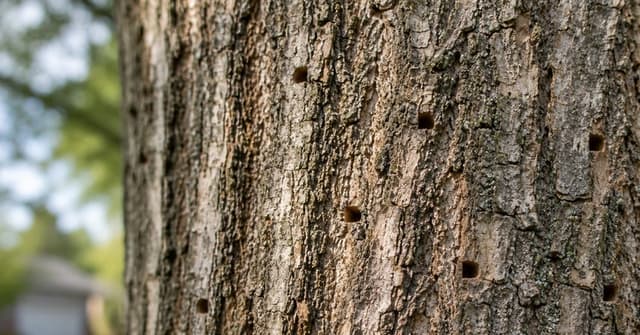
- D-shaped exit holes: Adult beetles create small D-shaped holes as they emerge from the tree.
- Canopy decline: Ash trees with EAB infestations often show thinning canopies, yellowing or browning leaves, and premature leaf drop.
- Bark splitting: Infested trees may show vertical splits in the bark, revealing larvae tunnels beneath.
- Sprouting: New shoots or sprouts may appear near the base of the tree as the tree struggles to survive.
How Homeowners Can Protect Their Trees
If you think your ash tree may be at risk, here are some proactive steps you can take:
Early Detection
Regularly inspect your ash trees for signs of EAB infestation. Start in late spring or early summer when the beetles are most active. If you notice any signs of damage, call a professional arborist to confirm the presence of EAB and discuss treatment options.
Chemical Treatments
In the early stages of an infestation, chemical treatments can help protect your tree. Systemic insecticides are often injected into the tree or applied to the soil around the root system. These treatments can kill larvae and prevent adult beetles from emerging.
Cultural Practices
Keep your tree healthy by providing proper watering, mulching, and pruning. A healthy tree is better equipped to fight off pests and recover from damage.
Professional Evaluation
An ISA Certified Arborist can assess the severity of the infestation, recommend the best course of action, and ensure that any treatments used are safe and effective.
When is Tree Removal Necessary?
While treatment can be effective for early infestations, heavily damaged trees may need to be removed. Here are some signs that removal might be necessary:
Severe Infestation:
If your tree has large sections of dead or dying wood, or if more than 50% of the tree’s canopy has been affected, removal is likely the best option.
Safety Risks:
Ash trees weakened by EAB are more prone to falling, especially in strong winds. If your tree is near structures, power lines, or walkways, it poses a potential safety hazard.
Spread of Infestation:
If the tree is in a densely wooded area or close to other ash trees, removal can help prevent the spread of EAB to healthy trees on your property or in the neighborhood.
Additional Prevention Tips
Diversify Your Landscape
Planting a variety of tree species on your property reduces the risk of widespread damage from pests like EAB. Avoid monocultures of ash trees to prevent a single pest from wiping out your landscape.
Monitor Neighboring Trees
EAB doesn’t stay confined to a single property. Work with your neighbors to monitor ash trees in the area and take action if infestations are detected.
Stay Informed
Keep up to date on the latest EAB control methods and regulations. The Colorado Department of Agriculture and local forestry services offer resources to help you stay informed.
Frequently Asked Questions (FAQs)
How long does it take for emerald ash borer larvae to cause visible damage?
It can take 1–2 years after the larvae hatch for significant visible damage to appear on your ash tree, though early signs like thinning leaves or small exit holes may appear sooner.
Can my tree survive if it has already been heavily infested with emerald ash borer?
It depends on the severity of the infestation. Trees that have suffered extensive damage may not recover, and removal may be the safest option. A professional arborist can evaluate the extent of the damage and recommend the best course of action.
Is it possible to treat my ash tree for emerald ash borer after it has been infested for a few years?
Yes, treatment can still be effective in the early stages of infestation. However, if the tree is too far gone (e.g., more than 50% of the canopy is dead), treatment may not be worthwhile, and removal could be necessary to protect surrounding trees.
Can I prevent the emerald ash borer from reaching my trees?
Preventative measures include early insecticide treatments, inspecting for signs of infestation, and removing dead or dying ash trees promptly. Practicing good tree care and ensuring your tree is healthy can also make it less susceptible to pests.
Should I replace my ash tree after removal?
Yes, if your ash tree is removed due to an emerald ash borer infestation, consider replacing it with a tree species that is not susceptible to EAB. Choose trees that are native to your area or resistant to pests for a more sustainable landscape.
Are there any natural methods for controlling the emerald ash borer?
While there are some biological control options, such as introducing parasitic wasps, they are generally less effective for large-scale infestations. Professional treatments with insecticides tend to provide better control and faster results.
Can emerald ash borer infestations be managed without chemicals?
Yes, non-chemical methods such as pruning, removing infested wood, and promoting tree health through proper care can help reduce the impact of EAB. However, chemical treatments are often the most effective way to stop the infestation from spreading.
How can I tell if my tree has emerald ash borer larvae inside?
The larvae themselves are not visible without peeling back the bark. However, signs like bark splitting, serpentine galleries beneath the bark, and D-shaped exit holes from adult beetles are key indicators.
Is it safe to prune or cut my ash tree if it has an emerald ash borer?
Yes, but be sure to dispose of the infested wood properly to prevent spreading the infestation. You should always consult an arborist before pruning to ensure safety and correct technique.
How can I tell if my ash tree is still alive after an emerald ash borer infestation?
Perform a scratch test: peel back a small section of bark on a branch. If the tissue underneath is green and moist, the tree may still be alive. If it is brown and dry, that portion of the tree is dead. A certified arborist can offer a full assessment.
Conclusion
The emerald ash borer is a serious threat to ash trees in Lafayette, CO, but early detection and treatment can save your trees. Homeowners should stay vigilant for signs of infestation and act quickly to protect their property. Whether you need to treat your trees or remove them for safety, partnering with a certified arborist ensures the best outcomes for your landscape.
By working with Roots Up Tree Company, you ensure expert, safe, and efficient buck moth control, helping to keep your trees healthy, your landscape pristine, and your family protected throughout the spring. Homeowners in Lafayette can trust Roots Up for early-season inspections, careful pruning of infested branches, and eco-friendly treatments to manage buck moth caterpillars. With years of experience, Roots Up delivers prompt, professional, and reliable solutions for tackling buck moth infestations effectively.