

Why Proper Tree Trimming Is Essential for Controlling Overgrowth
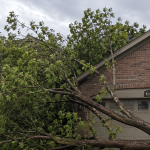
Overgrown trees don’t happen because the property owner wasn’t paying attention. They happen because trimming gets pushed to the back of the list, season after season, until what was a manageable canopy is now hanging over the roof, blocking gutters, and growing into utility lines. At that point, the job is three times harder than it needed to be.
Proper tree trimming – done on a consistent schedule with the right technique – keeps growth under control without stressing the tree. Here’s how to think about it.
What Overgrowth Actually Costs You
Overgrown trees create a compounding set of problems. When the canopy extends too far over structures, branches rub against roofing material, drop debris into gutters, and create moisture conditions that accelerate wood damage. Root systems expand along with the tree – if a tree is significantly overgrown, its root zone is likely intruding into areas you’d rather it wasn’t.
Beyond property damage, overgrowth increases the risk of failure. Heavy, end-loaded branches act as lever arms in high wind. The longer a branch gets without proper lateral reduction, the more force it generates in a storm. Boulder’s Front Range wind events aren’t gentle – a 60+ mph gust will find the weakest extended limb every time.
The Difference Between Proper Trimming and Just Cutting Things Back
This is where a lot of well-meaning homeowners go wrong. Topping a tree – cutting all vertical growth back to stubs – seems like a logical way to reduce height. It isn’t. Topping destroys the tree’s natural structure, creates large wounds that are slow to close, and triggers rapid regrowth of dense, weakly attached sprouts that create worse problems within a few seasons.
Proper trimming follows the tree’s natural architecture. Lateral cuts are made back to branch collars or to a side branch large enough to assume the terminal role. This slows regrowth rates, maintains structural integrity, and doesn’t leave the tree vulnerable to disease entry at large wound sites.
How Often Should Trees Be Trimmed in Boulder?
There’s no single answer, because it depends on species, age, location, and growth rate. That said, most established deciduous trees in Boulder benefit from a structural pruning cycle every 3 to 5 years. Young trees may need more frequent attention while their form is being established. Trees adjacent to structures, power lines, or high-traffic areas should be reviewed annually.
Some species grow faster than others. Silver maples, cottonwoods, and Siberian elms will require more frequent trimming than slower-growing oaks or honeylocusts. Knowing your species matters when setting a schedule.
Crown Reduction vs. Crown Thinning: Getting the Right Cut
These are two different tools for two different problems:
- Crown reduction reduces the overall size of the canopy by cutting back to lateral branches. It’s used when a tree has outgrown its space and you need to pull it back without destroying its shape.
- Crown thinning removes select interior branches to reduce density without changing the overall silhouette. It improves light penetration, airflow, and reduces wind resistance without the same level of size reduction.
For overgrowth control, crown reduction is typically the primary tool. An experienced tree service in Boulder will evaluate the canopy and recommend the right approach based on what the tree actually needs – not just what’s fastest.
The Role of Clearance Pruning
Clearance pruning is more targeted – it’s about removing specific branches that are encroaching on structures, signs, sight lines, or utility lines. It doesn’t address the overall size of the tree but keeps defined areas clear.
If you have trees growing toward your home’s roofline or within striking distance of your fence line, clearance work should happen on a 1 to 2 year cycle. It’s a smaller job than full structural trimming, but skipping it creates the conditions where a single branch causes major damage.
Overgrowth and Tree Health
There’s a health dimension to this too. Heavily overgrown canopies create shading problems for the tree itself – particularly in multi-stem situations where some trunks may be effectively shaded out by others. Dense interiors also trap moisture and create favorable conditions for fungal disease, as we covered in our piece on disease prevention.
A tree that’s properly trimmed on a regular schedule maintains a balanced canopy that supports good air circulation, even light distribution, and a structure that the root system can realistically support.
Get Ahead of Overgrowth This Season
If your Boulder property has trees that haven’t been properly trimmed in several years, this is a good season to address it. Our tree trimming crew works throughout Boulder and brings the expertise to do this work correctly – not just to cut things back, but to manage your trees for long-term health and safety.
Contact us to schedule a site visit and we’ll assess what needs to be done and give you a clear plan.