
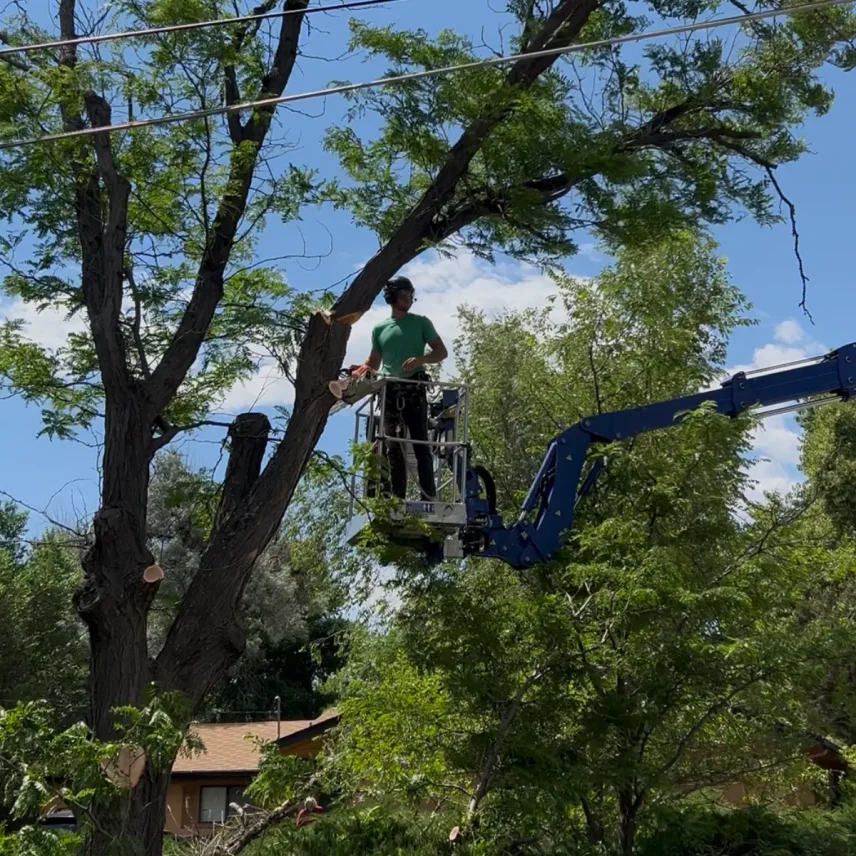
Lafayette homeowners must now balance two competing priorities: protecting their homes from wildfire through defensible space pruning and complying with the city’s updated tree protection ordinance. The rules are straightforward once you understand them. Protected trees cannot be removed without a permit. Pruning for fire safety is allowed, but it must follow specific limits, including never removing more than 25 percent of a tree’s functioning canopy. An ISA Certified Arborist should supervise any major pruning to keep you compliant and keep your trees healthy.
This guide breaks down exactly what you can and cannot do on your Lafayette property in 2026.
Key Takeaways
- Lafayette’s updated tree protection ordinance took effect in January 2025 and applies to all protected trees on private and public property.
- Pruning a protected tree is allowed, but you must remove less than 25 percent of the functioning leaf, stem, or root area.
- Fire safety pruning and defensible space work are permitted, but major work should be supervised by an ISA Certified Arborist.
- A tree permit is required to remove or destroy any protected tree.
- Dead and dying trees can be removed with a permit and an arborist report, but without a replacement requirement.
- Defensible space is not optional in wildfire-prone Boulder County. It protects your home, your neighbors, and firefighters.
What the Updated Tree Ordinance Actually Says
Lafayette’s updated tree protection ordinance defines protected trees based on species, size, and location. If a tree on your property meets the threshold, you cannot remove it without going through the city’s permit process.
According to the City of Lafayette, fire restrictions and wildfire preparedness are active concerns for the community, and the city evaluates conditions using the National Fire Danger Rating System and National Weather Service data. The tree ordinance was designed to work alongside these fire safety priorities, not against them.
The key rule for pruning: you may prune a protected tree provided the work removes less than one-fourth of the functioning leaf, stem, or root area and minimizes negative effects on the tree. Work should be performed under the supervision of an ISA Certified Arborist.
Why Fire Safety Pruning Matters in Lafayette
Lafayette sits along Colorado’s Front Range, where the urban landscape meets wildland vegetation. The Marshall Fire in December 2021 destroyed more than 1,000 structures in Boulder County and reminded every homeowner in the region that wildfire is not a distant threat.
According to Wikipedia’s entry on defensible space, defensible space is the buffer you create between a building on your property and the grass, trees, shrubs, or other fuels in close proximity to it. This space is needed to slow or stop the spread of wildfire and provides firefighters access and a safer area from which to defend a threatened area. Firefighters sometimes do not attempt to protect structures without adequate defensible space.
That last point matters. Without proper defensible space, firefighters may bypass your home entirely during a wildfire event. Fire safety pruning is not cosmetic. It is structural protection.
Defensible Space Zones for Lafayette Properties
| Zone | Distance from Structure | What to Do |
| Zone 0 | 0 to 5 feet | Use gravel, pavers, or concrete. No combustible mulch. Remove all dead vegetation. No tree branches should extend into this space |
| Zone 1 | 5 to 30 feet | Remove dead vegetation, create spacing between shrubs and trees, prune tree branches at least 6 feet from the ground, and keep branches 10 feet from structures |
| Zone 2 | 30 to 100 feet | Thin trees so canopies do not touch, remove ladder fuels, mow grass to 4 inches or less, and maintain vertical and horizontal spacing |
How to Prune for Fire Safety Without Violating the Ordinance
The ordinance and fire safety goals overlap more than they conflict. Here is how to stay compliant while creating effective defensible space.
| Action | Ordinance Status | Fire Safety Value |
| Remove dead branches and deadwood | Allowed without restriction | High: dead fuel ignites first |
| Prune lower branches up to 6 to 10 feet | Allowed if under 25 percent of the canopy | High: removes ladder fuels |
| Thin interior canopy for spacing | Allowed if under 25 percent of the canopy | High: reduces crown fire spread |
| Remove dead or dying trees | Requires permit + arborist report, no replacement needed | Critical: eliminates the highest-risk fuel |
| Remove a healthy protected tree | Requires a permit, fee, and a replacement tree | Only when no other option exists |
| Clear all vegetation in Zone 0 | Allowed (non-tree vegetation) | Critical: protects the structure directly |
The 25 percent rule is the line you cannot cross without additional permitting. An ISA Certified Arborist can calculate exactly how much canopy a tree can safely lose while remaining within compliance.
Schedule a fire mitigation consultation with Roots Up Tree Company before you start cutting. An ISA Certified Arborist will walk your property, identify which trees are protected, and build a pruning plan that satisfies both the tree ordinance and your defensible space requirements.
Common Mistakes Homeowners Make
Pruning without knowing which trees are protected: Not every tree on your property falls under the ordinance, but guessing wrong can result in fines and replacement requirements.
Removing too much canopy at once: Even for fire safety, taking more than 25 percent of a protected tree’s canopy in a single season violates the ordinance. Spread the work across multiple years if needed.
Ignoring the understory: Grass, shrubs, and ground-level vegetation are often the primary fuel that carries fire to your trees. Clearing ladder fuels is as important as pruning the canopy.
Topping trees for “fire safety”: Topping does not improve fire resistance. It weakens the tree, creates dense regrowth, and generates more fuel, not less.
Hiring unlicensed crews: Contractors without arboricultural training may remove protected trees or over-prune without understanding the legal consequences.
When You Need a Permit vs. When You Do Not
| Situation | Permit Required? |
| Removing a dead or dying protected tree | Yes, but no fee or replacement tree required (arborist report needed) |
| Removing a healthy protected tree | Yes, with a fee and a replacement tree required |
| Pruning a protected tree under 25 percent | No permit, but arborist supervision recommended |
| Pruning a non-protected tree | No permit required |
| Clearing shrubs, grass, and ground fuels | No permit required |
| Removing excluded species (invasive, fire-prone) | No permit required |
The Role of an ISA Certified Arborist
An ISA Certified Arborist is not just a good idea in Lafayette. It is close to a practical requirement. The ordinance specifies arborist supervision for pruning protected trees, and the permit process for removal requires an arborist report.
Beyond compliance, an arborist brings critical fire mitigation expertise. They can identify which trees are the highest fire risk, calculate pruning limits, recommend species-appropriate spacing, and produce the documentation you need for both the city and your insurance provider.
Many insurance carriers in Boulder County now require documented fire mitigation. An arborist’s report is the most credible evidence that you have taken reasonable steps to protect your property.
Frequently Asked Questions
Can I prune my trees for fire safety without a permit in Lafayette?
Yes, as long as the pruning removes less than 25 percent of the tree’s functioning canopy and is performed under arborist supervision for protected trees.
What makes a tree “protected” under the Lafayette ordinance?
Trees of indigenous species with a trunk diameter of 12 inches or more, native riparian trees with a diameter of 6 inches or more, and any tree designated for preservation as part of a development approval.
Can I remove a dead tree without a permit?
You still need a permit, but the city waives the fee and replacement tree requirement when accompanied by an arborist report confirming the tree is dead or dying.
What is defensible space and how much do I need?
Defensible space is the managed buffer zone around your home that reduces wildfire fuel. The standard recommendation is 100 feet of managed space divided into three zones with increasing vegetation management as you get closer to the structure.
Will my insurance drop me if I do not mitigate?
Some Boulder County insurers have dropped or non-renewed policies for homeowners who lack documented fire mitigation. Having a professional mitigation plan and an arborist report on file significantly reduces that risk.
What is a “ladder fuel” and why does it matter?
Ladder fuels are vegetation layers that allow fire to climb from the ground into the tree canopy. Tall grass, dense shrubs, and low-hanging branches are common examples. Removing them is one of the most effective fire mitigation steps you can take.
How far should tree branches be from my house?
At least 10 feet from the structure and 15 feet from chimneys. Zone 0 (0 to 5 feet from the house) should have no branches at all.
What species are excluded from the tree protection ordinance?
The ordinance excludes species that are invasive, fire-prone, or otherwise undesirable. These can be removed without a permit. The full list is included in the ordinance text.
Can I do fire mitigation work myself?
You can clear ground fuels, mow grass, and remove small shrubs yourself. Pruning protected trees or removing any tree larger than the ordinance thresholds should involve an ISA Certified Arborist.
When is the best time to do fire mitigation in Lafayette?
Late fall through early spring, before fire season begins. Most professionals recommend completing all major mitigation work by April.